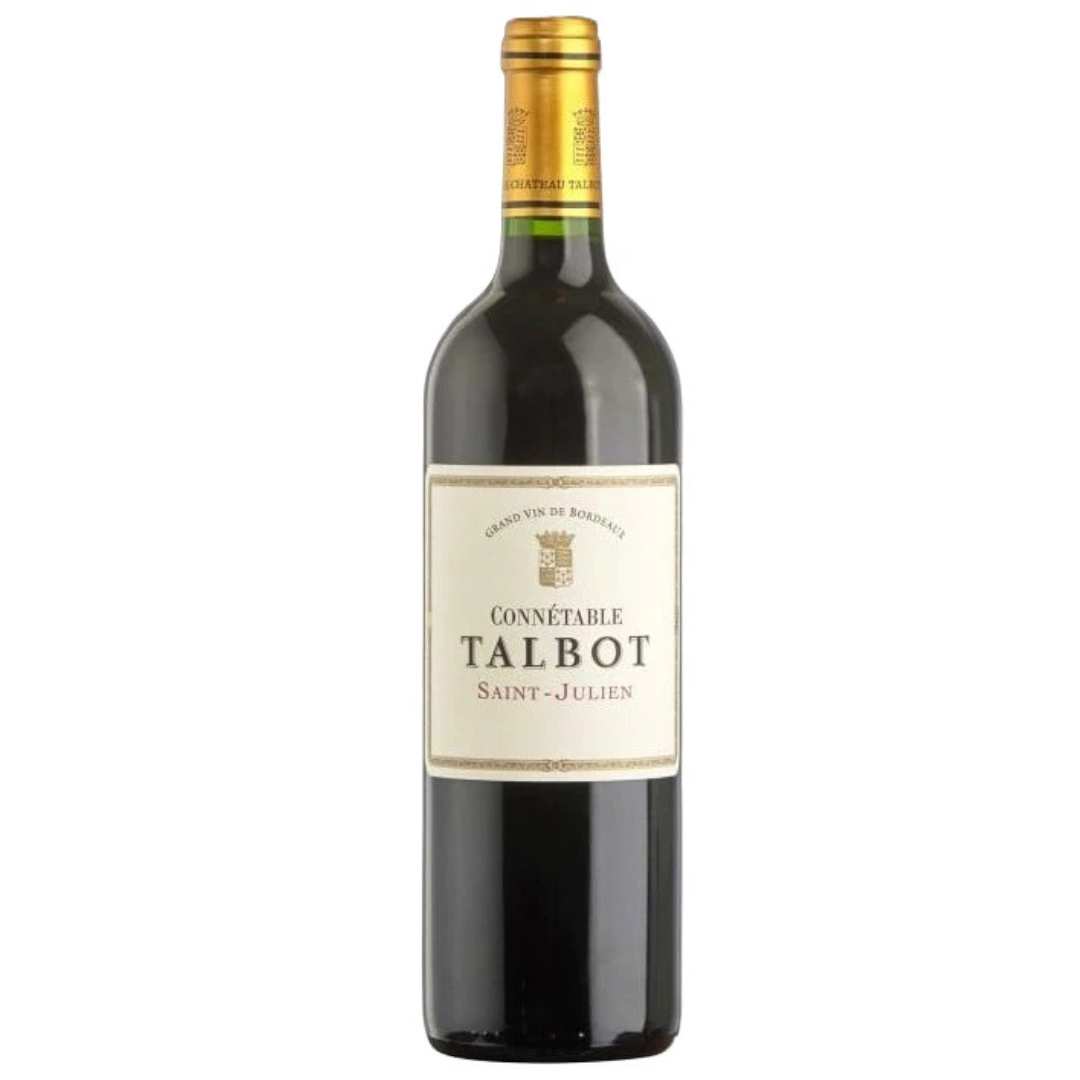
Connetable De Talbot 75cl
Connetable De Talbot 75cl
Couldn't load pickup availability
Le Connetable De Talbot is a classic second wine from Château Talbot in the Saint-Julien appellation, available in 75cl bottles, with technical characteristics reflecting the Bordeaux terroir and renowned expertise.
General characteristics
Appellation: Saint-Julien, Bordeaux, France.
Classification: Second wine of Château Talbot, a 4th-ranked Grand Cru Classé (1855).
Format: 75cl bottle (0.75 L).
Alcohol content: Generally around 12.5% to 13% depending on the vintage, for example 13% for the 2021 vintage
Color: Intense and classic red wine.
Producer: Bignon-Cordier family, owners of Château Talbot and Le Connetable for several decades
Terroir and vineyard
The vineyard covers a substantial area (for example 104 ha for the overall Talbot vineyard) with an average vine age of around 40 years
The wine benefits from a typical Médoc terroir, combining gravel soils and limestone terroir.
The grapes are harvested by hand, with a rigorous selection of the best bunches.
The wine is aged in barrels (often partially new) to preserve its structure and elegance.
Blend and style
Le Connetable Talbot is usually made from a blend predominantly composed of Cabernet Sauvignon, complemented by Merlot and sometimes a small proportion of Petit Verdot or Cabernet Franc, depending on the vintage.
This second wine showcases a tight tannic structure, with aromas of red and black fruits (sour cherries, black berries), and a fresh and elegant finish
The wine stands out for its classic balance, capable of aging favorably.
Additional notes
Le Connetable Talbot has been produced since the 1960s, bearing witness to a rigorous tradition in the Talbot vineyard.
The minimum order quantity may be 6 bottles depending on certain commercial conditions
The technical sheets for recent vintages (2022,2023) will be officially published when they become commercially available, generally several years after the harvest.