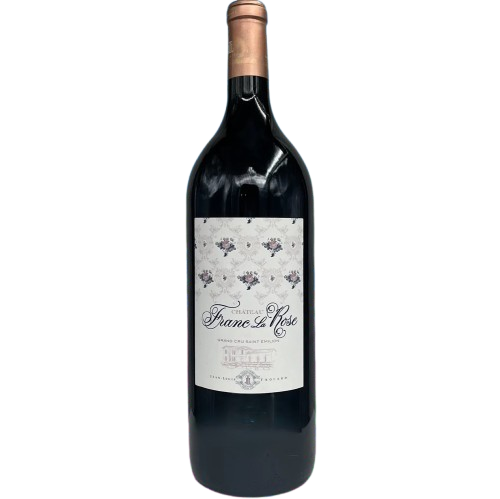
Chateau Franc La Rose 300cl
Chateau Franc La Rose 300cl
Couldn't load pickup availability
Château Franc La Rose 3 L is a Saint-Émilion Grand Cru made from Merlot and Cabernet Franc, aged for 18 months in French barriques, offering aromatic complexity, elegance, and aging potential.
General Characteristics
Appellation: Saint-Émilion Grand Cru AOC, Bordeaux, France
Producer: Jean-Louis and Benoît Trocard, Vignobles Trocard
Format: 3 liters (Jeroboam)
Grape varieties: 75% Merlot, 25% Cabernet Franc
Average vine age: 40 years
Terroir: Clay-limestone plateau, soil conducive to Saint-Émilion Grand Cru
Vinification and Aging
Harvest: Hand sorting and carefully selected grapes
Vinification: Traditional Bordeaux method with maceration for 4 to 5 weeks
Aging: 18 months in French oak barriques, including 60% new barriques
Alcohol content: Approximately 13.5% to 14% depending on the vintage
Sugar content: Approximately 2.9 g/L
Tasting
Color: Deep red with purple highlights
Nose: Aromas of black fruits (cherry, blackcurrant), spicy notes, and floral touches such as old rose, with subtle oak, vanilla, and licorice depending on the vintage
Palate: Fine and elegant tannins, a full-bodied and smooth texture, balance between fruit and oak, good length, and complexity
Aging potential: Generally 5 to 15 years depending on the vintage and storage conditions
Serving temperature: 16–18°C, ideally decanted 1 hour before serving
Food and Wine Pairings
Grilled or roasted red meats (duck breast, Bordelaise ribeye steak)
Game and regional dishes (duck confit, Bordelaise lamprey)
Aged cheeses and fine charcuterie
Notes and Recommendations
Recent vintages to favor: 2020 and 2022 for finesse and balance
Ratings: Extraprima 90–92/100, Jeb Dunnuck 88–90/100 for the 2021 vintage
The quality remains consistent in the 3 L format compared to standard bottles, as the wine is simply packaged in a larger volume.
In summary, the Château Franc La Rose 3 L retains all the qualities of its Saint-Émilion Grand Cru appellation, combining aromatic richness, fine tannins, and an optimal expression of its terroir thanks to careful vinification and extended aging in French barriques.